
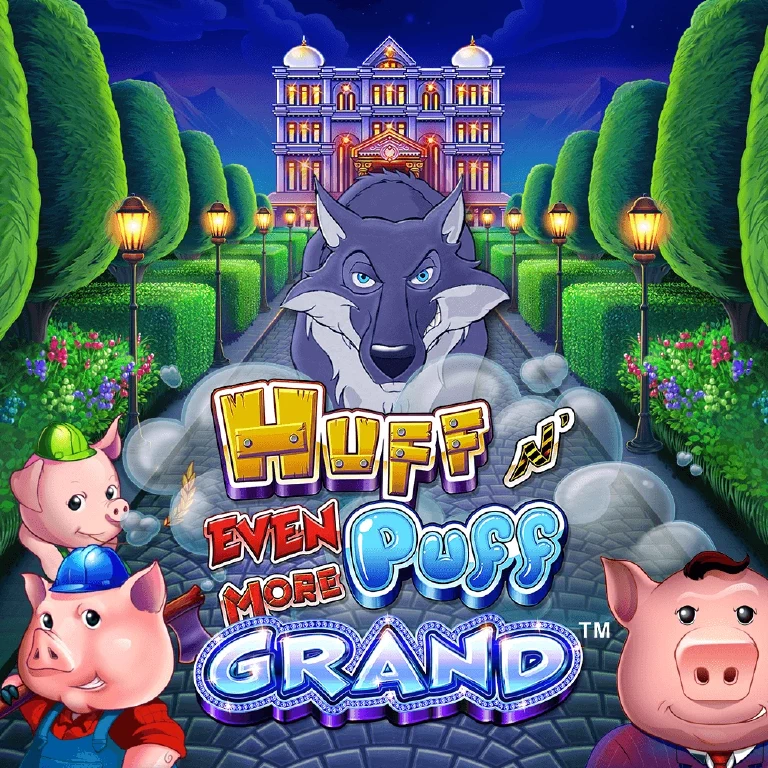
Original Huff N Puff: settings by installation#
For the original land-based game, a return percentage belongs to the software installed on a particular machine, together with the denomination and the jackpot scope it was set up with. Two cabinets that look identical can therefore carry different settings.
Use the cabinet’s own Help screen for the figure that applies to the machine in front of you. The payout guide explains how credits and denominations fit together; a payout display and an RTP configuration describe different aspects of the game.
Main online configuration tables#
Each row keeps an online edition, its game ID and its RTP setting together. More Puff’s EU/UK IDs are distinct from the IDs of other markets.
| Online edition | Game ID | RTP |
|---|---|---|
| More Puff, EU/UK | 71647 | 96% |
| More Puff, EU/UK | 71648 | 94% |
| More Puff, EU/UK | 71660 | 92% |
| More Puff, EU/UK | 71649 | 90% |
| More Puff, EU/UK | 71659 | 87% |
| Even More Puff | 71789 | 96% |
| Even More Puff | 71790 | 94% |
| Even More Puff | 71791 | 92% |
| Even More Puff | 71792 | 90% |
| Even More Puff | 71793 | 87% |
| Lots of Puff | 71873 | 96% |
| Lots of Puff | 71874 | 94% |
| Lots of Puff | 71875 | 92% |
| Lots of Puff | 71876 | 90% |
| Lots of Puff | 71877 | 87% |
| Even More Puff Grand | 71941 | 96% |
| Even More Puff Grand | 71940 | 94% |
| Even More Puff Grand | 71939 | 92% |
| Even More Puff Grand | 71938 | 90% |
| Even More Puff Grand | 71937 | 87% |
| Xtra Puff | 2590129 | 94% |
| Xtra Puff | 2590128 | 92% |
For the feature rules behind the tables, see More Puff, Even More Puff and Grand, or Lots of Puff.
RTP describes long-run maths#
A 96% theoretical return represents a modelled average return of 96 units for every 100 units wagered over a very large volume of play under that configuration. Individual sessions can finish above or below the starting balance. A short run of wins or losses is a session result, while RTP is a property of the game’s maths.
The stake determines the amount assigned to a spin. Session length determines how many spins you choose to make. Our strategy page explains those player choices and the role of independent outcomes.
Top Prize, Max Win and Max Exposure#
More Puff’s EU/UK product uses Top Prize: 5,500×. Even More Puff uses a 7,500× top-prize headline and has a named 7,500× Super Jackpot. Lots of Puff uses Max Win: 7,800×, alongside its 7,500× Super Jackpot. Grand uses Max Exposure: 10,000×.
Retain those labels when comparing the games. They refer to a product maximum or a named award, whereas RTP measures the theoretical share returned across play. The series overview helps connect each figure to the right title.